Senior Home Workouts: 6 Simple Strength Exercises You Can Do at Home
Want to build strength but prefer not to go to the gym? For adults aged 50 and above, exercising at home can be a simple first step towards a regular strength-training routine.
Older adults can strengthen their legs, glutes and upper body at home with simple exercises such as chair sit-to-stands, supported calf raises and wall push-ups. You do not need heavy equipment to get started. What matters is choosing movements that suit your ability and progressing gradually.
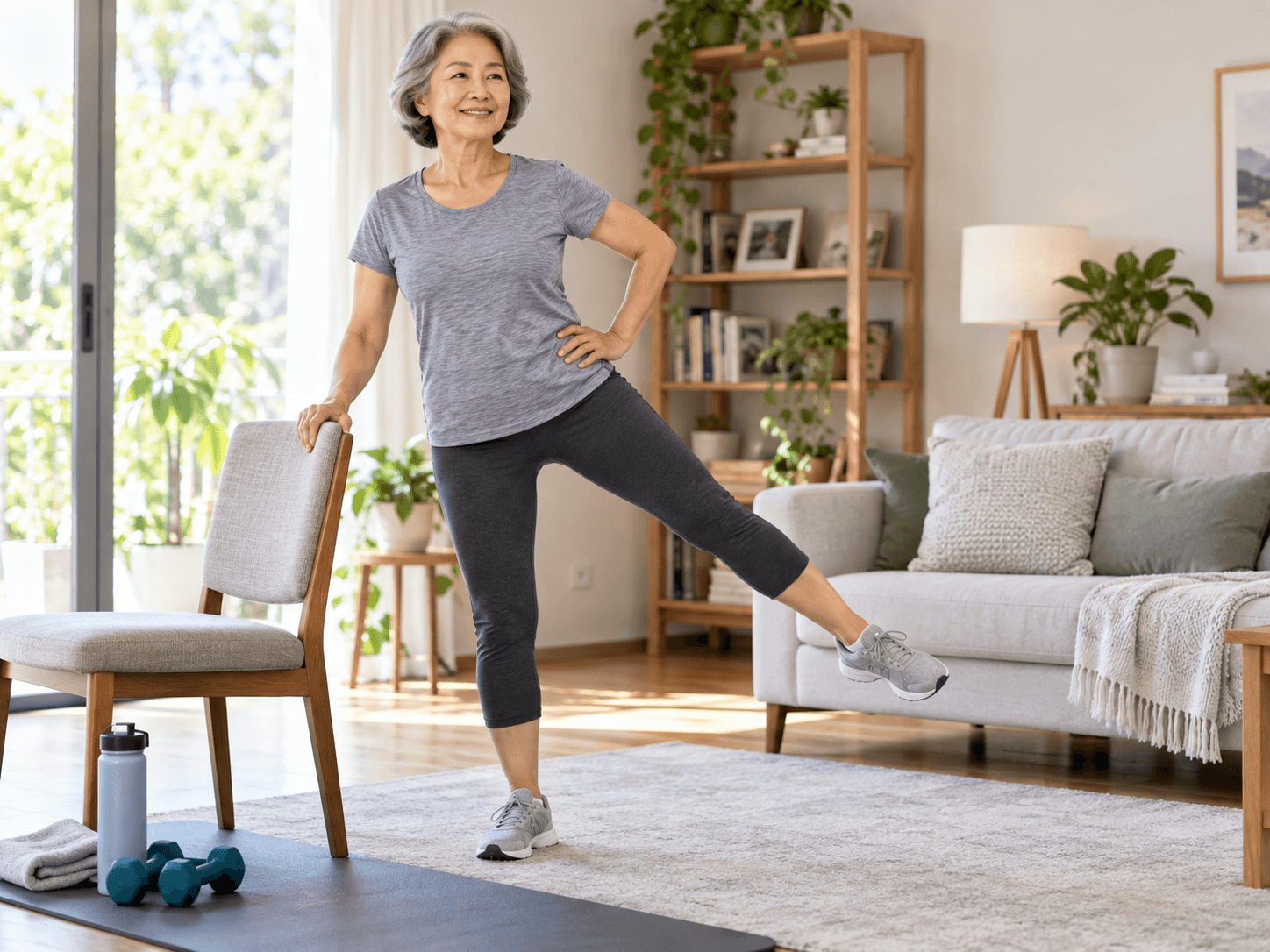
What Should Seniors Prepare Before Exercising at Home?
Home workouts can use your body weight, a sturdy chair, a wall and basic equipment. There is no need to invest in large exercise machines.
For adults over 50, however, choosing a safe exercise space and understanding your current abilities are just as important as the movements themselves.
Before you begin, consider the following:
- Choose a flat, non-slip area free of clutter.
- Use a sturdy chair without wheels.
- Wear suitable exercise shoes and avoid exercising barefoot on slippery floors.
- Warm up with gentle marching or easy joint movements for around 3–5 minutes.
- Choose exercises that match your strength and balance.
- Breathe naturally, and avoid holding your breath or forcing a movement.
If you have an uncontrolled chronic condition, have recently had surgery, experience unexplained pain or have significant balance difficulties, consult a doctor or an appropriate healthcare professional before starting a new exercise programme.
The goal of exercising at home is not to complete as many repetitions as possible. It is to help your body adapt to movement safely and with good control.
6 Simple At-Home Strength Exercises for Seniors
These six exercises work the legs, glutes, chest, arms and upper back. They offer a practical starting point for building a home strength-training habit.
Beginners do not need to complete all six exercises in one session. Start with movements you can perform comfortably, and gradually increase repetitions or difficulty as your body adapts.
Chair Sit-to-Stand
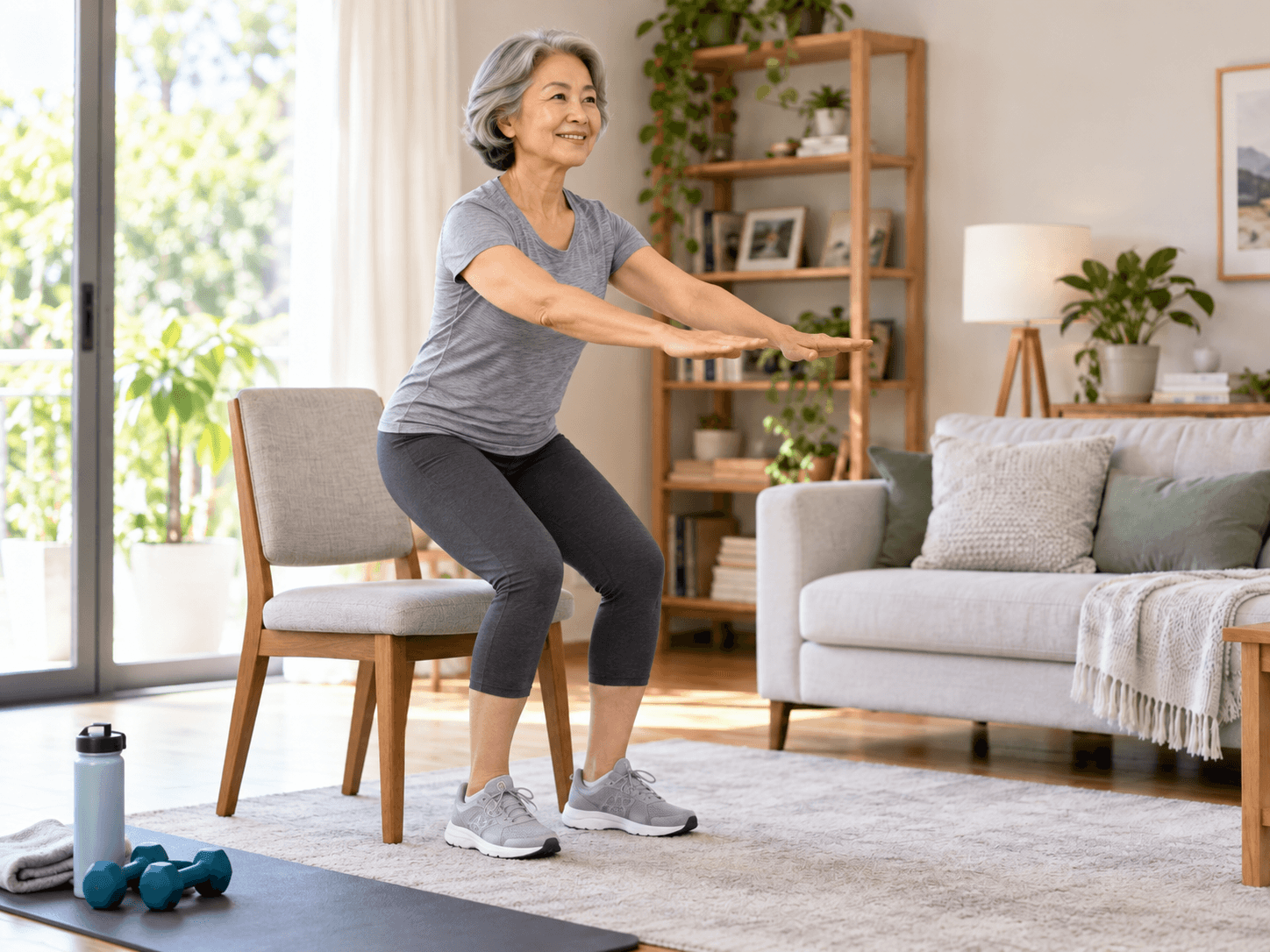
Muscles worked: Thighs and glutes
How to do it: Sit towards the front of a sturdy chair, with your feet flat on the floor and about hip-width apart. Lean forward slightly, stand up slowly, then lower yourself back onto the chair with control.
Safety tip: Beginners can use a higher chair and their hands for support if needed. Avoid dropping suddenly into the seat, and keep your knees aligned with your feet.
Supported Calf Raise
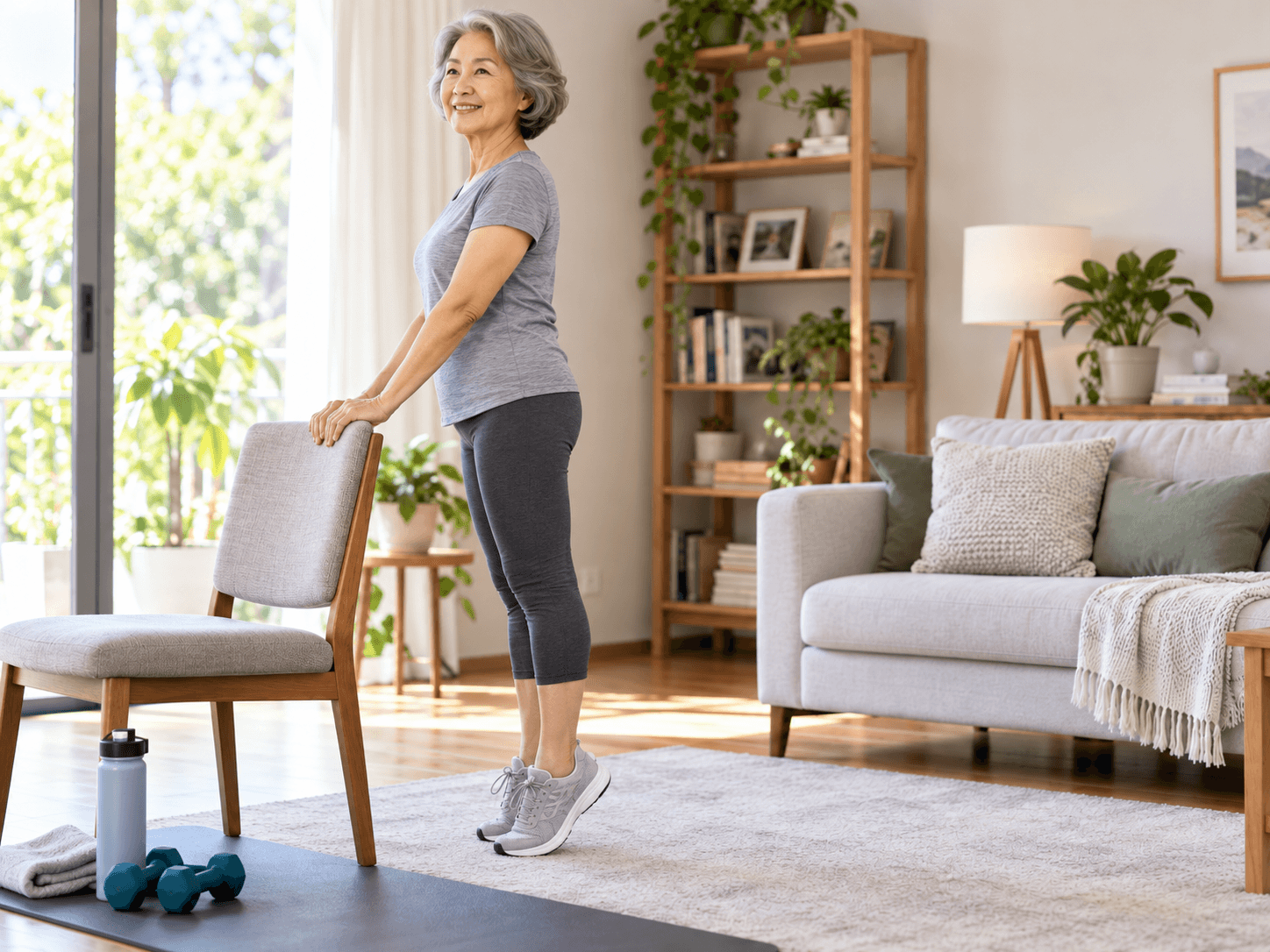
Muscles worked: Calf muscles
How to do it: Stand behind a sturdy chair or next to a stable countertop, holding on lightly for support. Slowly lift your heels so your weight shifts towards the balls of your feet, then lower your heels with control.
Safety tip: Stay upright and avoid swinging your body for momentum. If your balance is limited, make sure you have secure support.
Supported Side Leg Raise
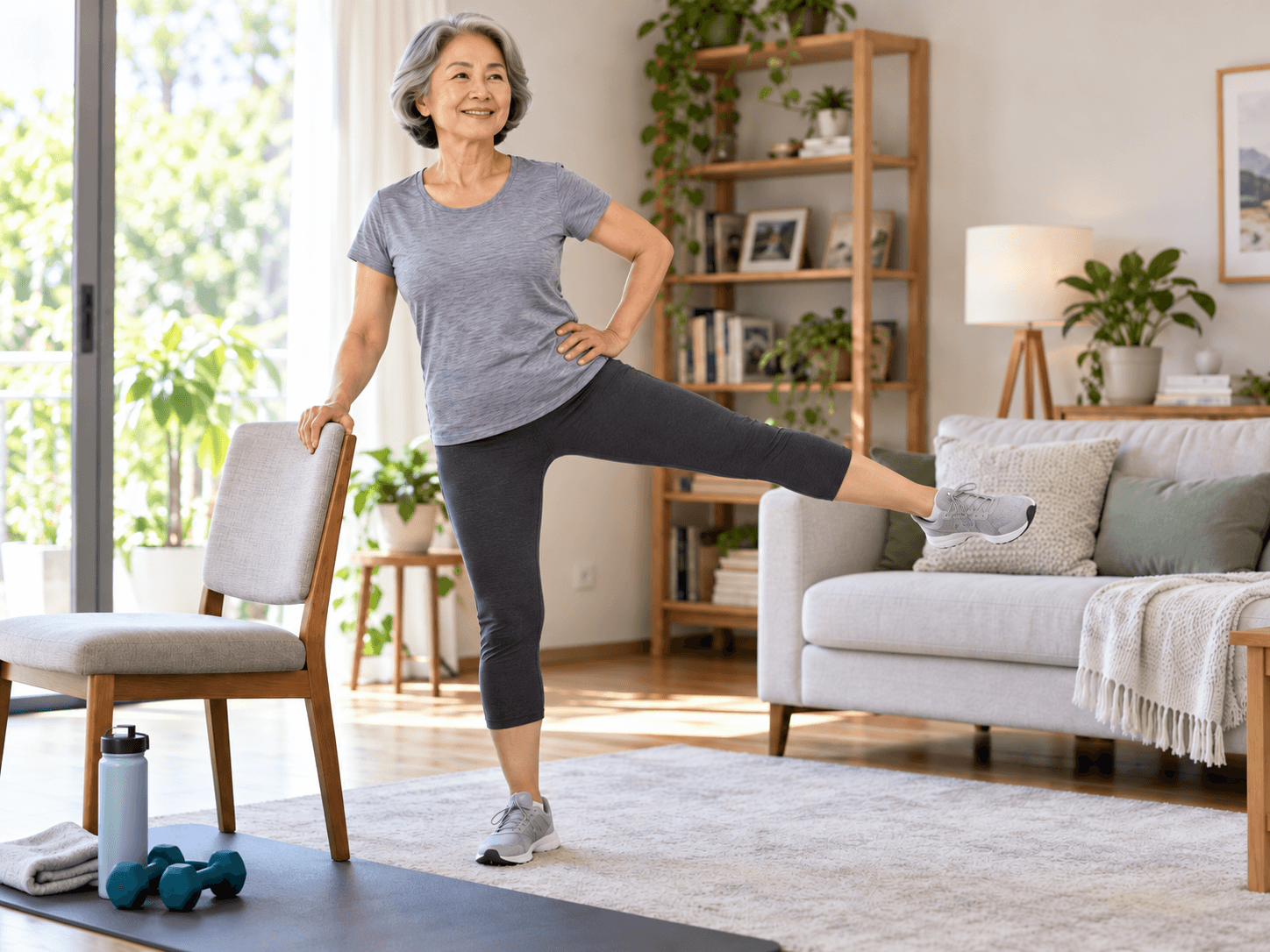
Muscles worked: Glutes and muscles around the hips
How to do it: Stand upright while holding a sturdy chair or countertop. Slowly lift one leg out to the side, then return it to the starting position with control. Repeat on both sides.
Safety tip: There is no need to lift your leg high. Avoid leaning sideways, twisting your lower back or swinging your leg.
Wall Push-Up
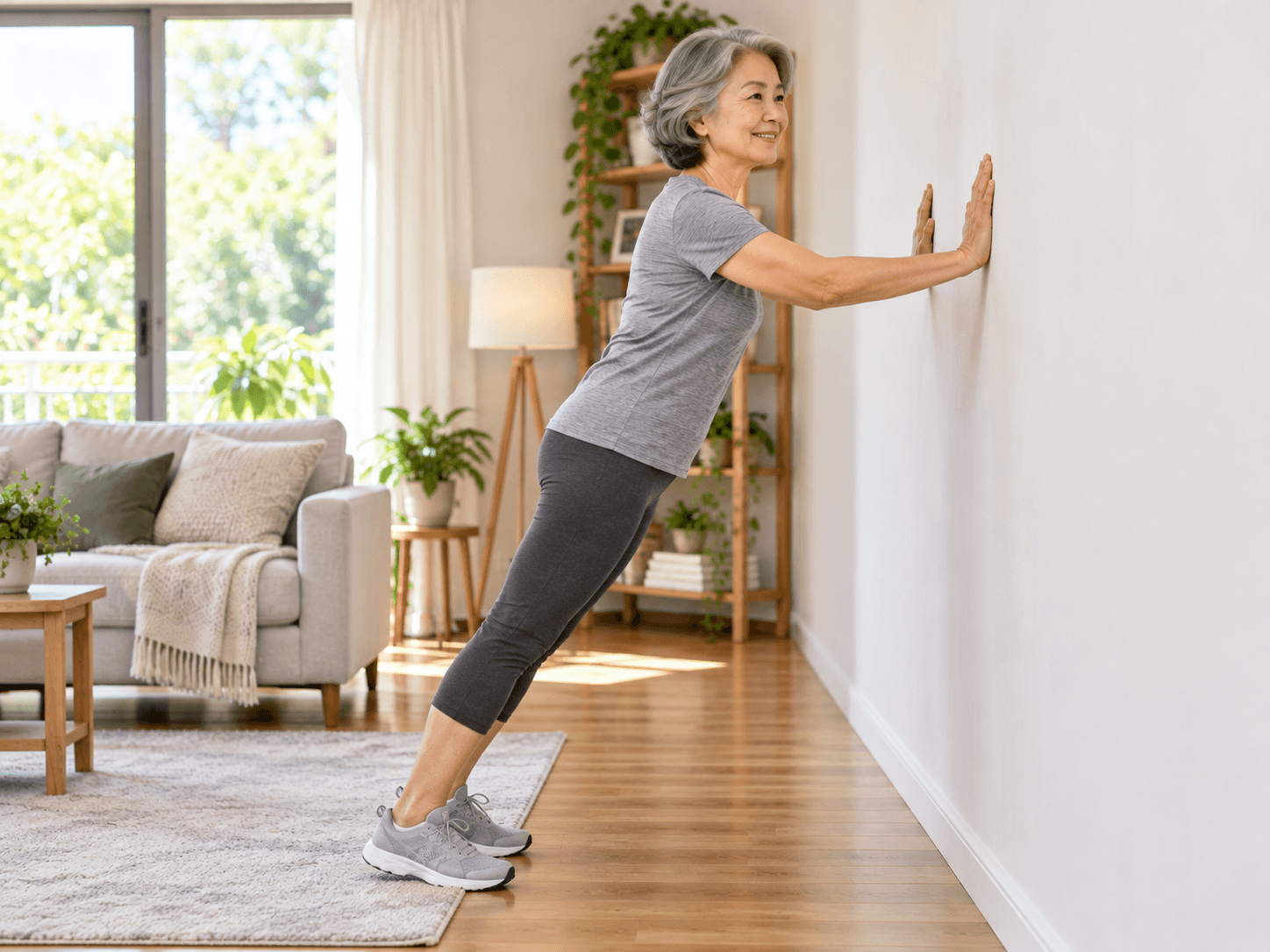
Muscles worked: Chest, shoulders and arms
How to do it: Stand facing a wall, with your hands placed against it at about shoulder height. Slowly bend your elbows to bring your body towards the wall, then push yourself back to the starting position.
Safety tip: Keep your trunk steady without letting your lower back sag. Standing closer to the wall makes the exercise easier.
Water Bottle Biceps Curl

Muscles worked: Front of the upper arms
How to do it: Sit or stand steadily, holding a light water bottle in each hand. Keep your elbows near your sides, slowly bend your elbows to lift the bottles, then lower them with control.
Safety tip: Start with small, light bottles. Avoid shrugging your shoulders or leaning backwards to lift them. You can do the exercise sitting down if standing feels unstable.
Resistance Band Pull-Apart
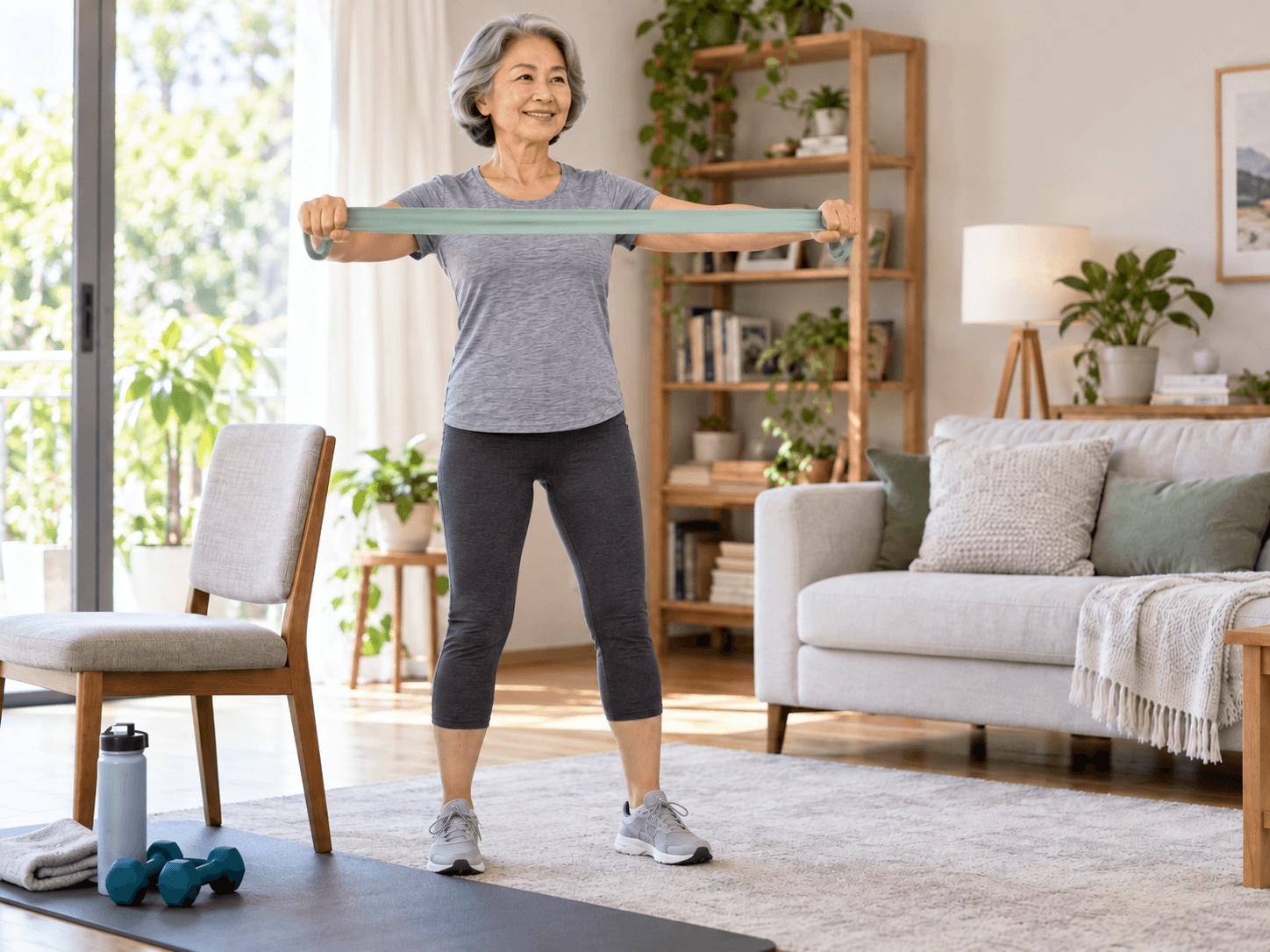
Muscles worked: Upper back and rear shoulders
How to do it: Sit or stand steadily and hold a light resistance band in both hands in front of your chest. Slowly pull the band apart, then return to the starting position with control.
Safety tip: Keep your shoulders relaxed and avoid shrugging or pulling too hard. If you have shoulder discomfort, seek guidance on a suitable range of motion before trying the exercise.
These images are AI-generated exercise illustrations, not photographs of PT101 trainers or clients. Adjust your range of motion and exercise difficulty to your individual ability.
How Often Should Seniors Do Strength Exercises at Home?
If you are new to exercise, you can begin with two strength-training days per week, with a rest day in between.
As a starting point, try one set of five to eight repetitions per exercise. Once your movement becomes more controlled and your body adapts, gradually work towards eight to twelve repetitions per set and adjust the number of sets or resistance to suit your ability.
The US Centers for Disease Control and Prevention (CDC) recommends that adults aged 65 and above include muscle-strengthening activities on at least two days each week, alongside aerobic and balance activities.
The right amount of exercise also depends on your health, normal activity level and recovery. There is no single training volume that suits everyone.
A Tip for Home Workout Beginners
If you have not exercised regularly before, start with three or four manageable movements and focus on technique and stability.
Once your body is comfortable with the routine, gradually add other exercises or increase resistance. A sustainable routine matters more than doing too much at the start.
Common Home Workout Mistakes Seniors Should Avoid
Even simple home exercises can place unnecessary strain on your body if the movements are poorly controlled or the workout is too demanding.
Doing Too Much Too Soon
Some people want to improve their fitness quickly when they first start exercising, so they repeat large numbers of the same movements every day.
Your body needs time to adapt and recover. If you are a beginner, building a consistent routine is more important than suddenly increasing your workload.
Counting Repetitions Instead of Focusing on Form
Strength training is not just about how many repetitions you complete. If you have to swing your body, use momentum or struggle to maintain balance, the exercise may be too difficult at your current level.
Pushing Through Pain
Mild muscle soreness after exercise is different from joint pain or sudden, sharp pain.
If you experience significant pain while exercising, stop that movement. Seek advice from a healthcare professional if the pain continues or worsens.
When Might Seniors Benefit from Professional Training?
Home workouts can be a good first step towards becoming more active, but everyone has different levels of strength, balance and exercise experience.
If you are unsure about your technique, when to increase resistance or how to build a more structured programme, one-on-one coaching can help you adjust the exercises to your ability.
PT101 offers specialised one-on-one fitness training for adults aged 50 and above.
Our trainers begin by understanding your daily activities, exercise history, physical condition and goals. They then select exercises that suit your current abilities.
Training may include strength, balance, mobility and overall fitness work, with adjustments as you progress.
The aim of senior fitness training is not to lift more weight than someone else. It is to maintain the strength and mobility you need for everyday life as you grow older.
Frequently Asked Questions
Do Seniors Need Gym Equipment for Home Workouts?
Not necessarily. Chair sit-to-stands, supported calf raises and wall push-ups can be done using everyday household fixtures. If you want to add resistance, you may use light water bottles or a low-resistance exercise band, depending on your ability.
Is It Better to Do All Six Strength Exercises Every Day?
Not necessarily. Muscles need time to recover after strength training. Beginners can start with two strength-training days per week and stay active with suitable walking or other daily movement in between. Adjust your routine as your body adapts.
Can Seniors with Knee Discomfort Do Chair Sit-to-Stands?
It depends on the cause and severity of the discomfort. Some people may be able to use a higher chair, reduce the movement range or add support. If the pain persists, has no clear cause or gets noticeably worse, seek an assessment from a healthcare professional first.