How Should Seniors Combine Cardio and Strength Training? A Practical Guide to Improving Endurance and Strength
As we age, muscle strength, cardiovascular endurance, and balance may gradually decline. Some older adults notice that walking becomes more tiring, climbing stairs feels more difficult, or even carrying groceries requires more effort than before.
Many people believe that going for a daily walk provides enough physical activity. However, in addition to aerobic exercise, appropriate strength training is equally important.
Both types of exercise offer different benefits. When combined appropriately, they can help older adults gradually build an exercise routine, improve physical function, and make everyday activities easier — even without previous fitness training experience.

1. Why Should Seniors Combine Cardio and Strength Training?
Cardio: Improving Cardiovascular Endurance
Aerobic exercise, also known as cardio, involves continuous physical activity that moderately increases your heart rate and breathing.
Suitable aerobic activities for older adults may include:
- Brisk walking
- Stationary cycling
- Swimming and water walking
- Gentle dancing
- Low-impact aerobic activities suited to individual abilities
Regular aerobic exercise can help improve cardiovascular fitness and endurance, making everyday activities such as walking, shopping, and moving around easier.
Strength Training: Maintaining Muscle Strength
Strength training does not necessarily require heavy dumbbells or large gym machines. Bodyweight exercises, resistance bands, and lightweight equipment can also help strengthen muscles.
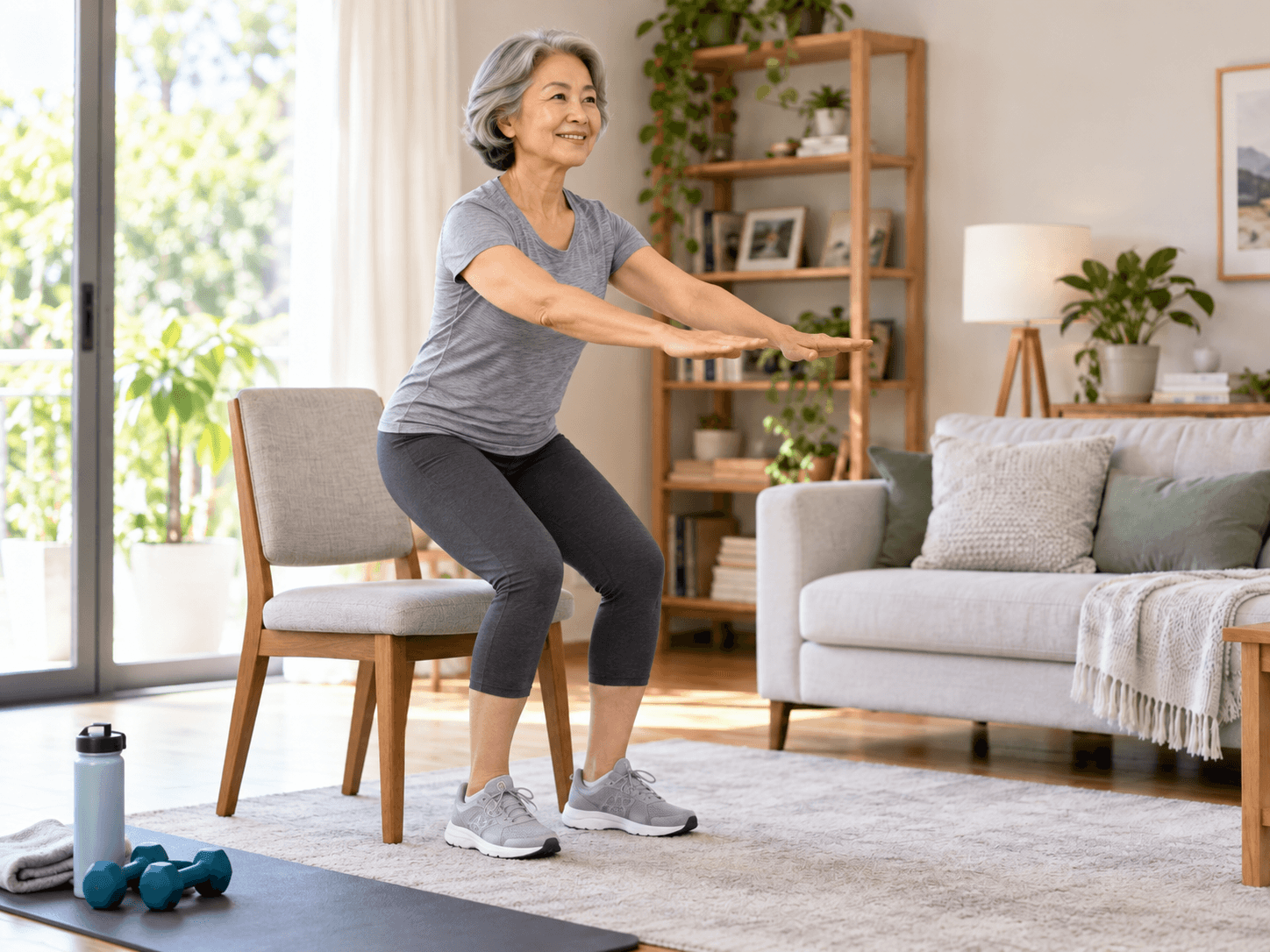
Exercises such as chair sit-to-stands, wall push-ups, and supported calf raises can be suitable starting points for some older adults.
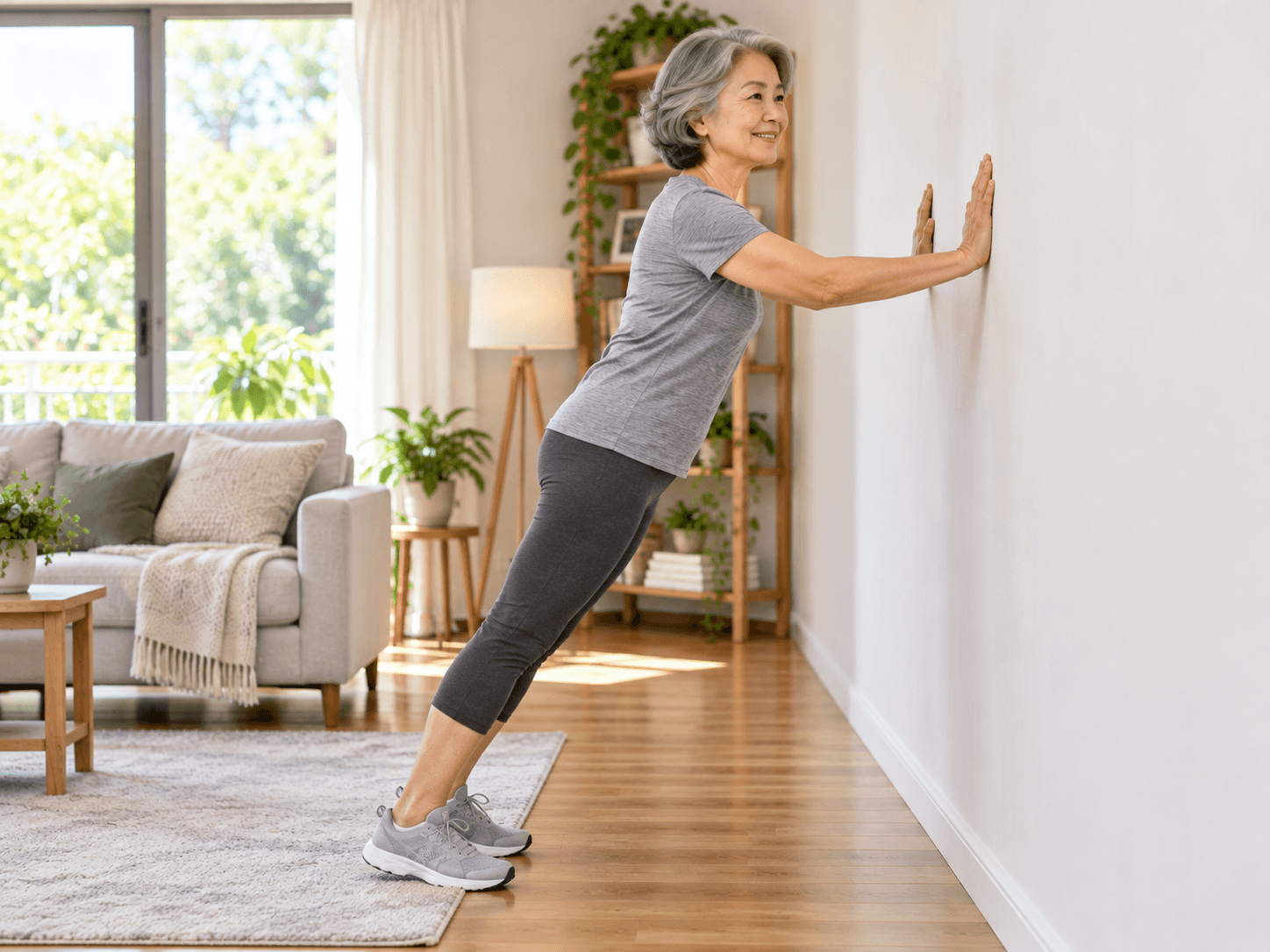
Regular strength training helps maintain muscle strength, improve physical stability, and support everyday activities such as standing up, climbing stairs, and carrying objects.
Cardio helps maintain cardiovascular endurance, while strength training supports the muscle strength needed for daily activities. Both complement each other.
Related reading: Senior Home Workouts: 6 Simple Strength Exercises You Can Do at Home .
2. Should Seniors Do Cardio Before or After Strength Training?
For generally healthy older adults, cardio and strength training can be performed on separate days or during the same workout session. If you choose to combine both in one session, the following sequence can be a helpful starting point.
Step 1: Warm Up for 5–10 Minutes
Start with gentle marching on the spot, slow walking, or simple joint movements to gradually prepare your body for exercise.
Step 2: Complete Your Main Workout
If your main goal is to improve muscle strength, you can begin with chair sit-to-stands, wall push-ups, or other exercises suited to your abilities, followed by gentle walking.
If your main goal is to improve cardiovascular endurance, you may complete your aerobic activity first, provided the intensity is suitable for your fitness level.
Step 3: Cool Down for About 5 Minutes
Gradually slow your walking pace, allowing your breathing and heart rate to return towards their resting levels.
There is no single exercise sequence that works best for everyone. The order should depend on your health, mobility, physical ability, and exercise goals.
3. How Much Exercise Should Seniors Do Each Week?
PT101 Fitness offers senior fitness training designed for adults aged 50 and above. According to the World Health Organization (WHO), physical activity recommendations for adults aged 65 and above include:
- 150–300 minutes of moderate-intensity aerobic activity per week, or an appropriate amount of vigorous-intensity activity according to individual ability.
- Muscle-strengthening activities on at least 2 days per week, involving all major muscle groups.
- Multicomponent physical activities emphasising balance and strength on at least 3 days per week, to maintain functional ability and reduce the risk of falls.
Adults aged 50–64 can also refer to general adult physical activity guidelines, adjusting their exercise routines according to their health and fitness levels.
For older adults who have not been exercising regularly, there is no need to achieve these targets immediately. Starting with 10–15 minutes of walking per session and gradually increasing the duration can be a practical approach.
Moderate-intensity exercise generally means your breathing becomes faster, but you can still carry on a conversation.
4. A Sample Weekly Exercise Plan for Seniors
The following is a sample exercise schedule for generally healthy older adults who already have basic mobility and functional fitness.
| Day | Recommended Activity |
|---|---|
| Monday | 30 minutes of brisk walking + full-body strength training |
| Tuesday | 30 minutes of brisk walking + supported balance and light strength exercises |
| Wednesday | Gentle walking or stretching |
| Thursday | 30 minutes of brisk walking + full-body strength training |
| Friday | 30 minutes of brisk walking + balance and light strength exercises |
| Saturday | 30 minutes of brisk walking + balance and light strength exercises |
| Sunday | Gentle activity and rest |
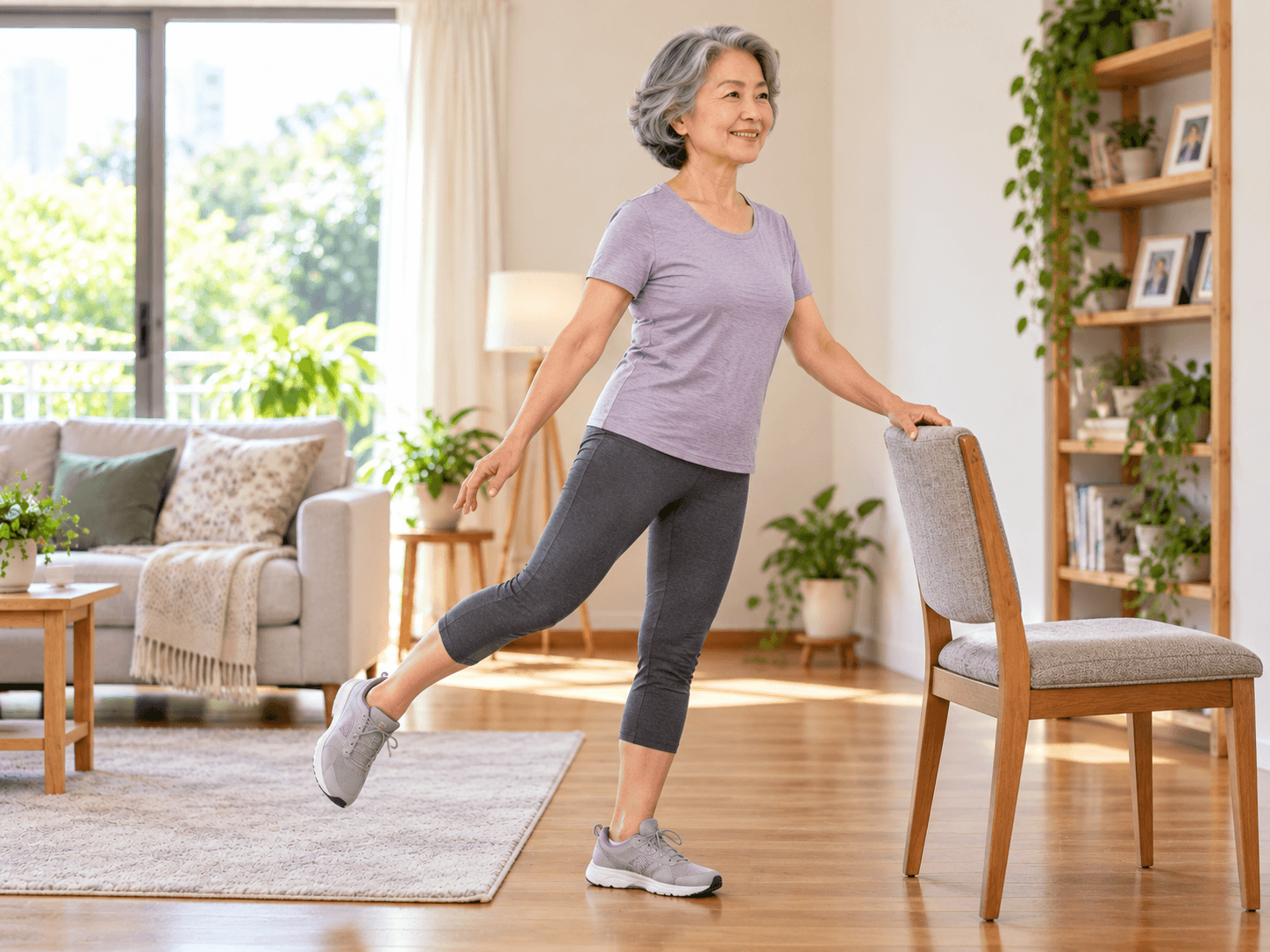
This sample schedule includes 150 minutes of brisk walking per week, two full-body strength training sessions, and three additional days of balance and light strength exercises.
Exercise duration and intensity should be adjusted according to individual fitness and recovery needs.
If you are just beginning to exercise, start with shorter sessions and gradually increase the duration. Older adults with poor balance or a history of falls should seek professional assessment before attempting activities that may increase their risk of falling.
5. What Should Seniors Keep in Mind When Exercising?
1. Do Not Rely on Walking Alone
Walking helps maintain physical activity levels, but it cannot completely replace strength exercises that target the major muscle groups.
2. Increase Exercise Intensity Gradually
There is no need to compare your speed, repetitions, or weights with others. Choose exercises that match your abilities and gradually increase the difficulty to build a sustainable routine.
3. Pay Attention to Your Body
Maintain natural breathing during exercise. Avoid holding your breath or suddenly increasing exercise intensity.
If you experience chest pain, significant dizziness, unusual difficulty breathing, or other sudden discomfort, stop exercising and seek appropriate medical attention.
Individuals with chronic medical conditions, recent surgery, or significant mobility limitations should consult a healthcare professional before starting a new exercise programme.
6. Building an Exercise Routine That Works for You
For older adults, exercise is not necessarily about moving faster or lifting heavier weights. The goal is to maintain strength, fitness, and the ability to perform everyday activities.
Taking a few more steps each day and introducing two simple strength training sessions per week can be a positive first step towards developing healthier habits.
By combining cardio, strength training, and balance exercises, older adults can help maintain physical function and feel more confident in their everyday lives.
References
World Health Organization: WHO Guidelines on Physical Activity and Sedentary Behaviour
CDC: Physical Activity Guidelines for Older Adults
Exercise images in this article are AI-generated illustrations and do not depict actual PT101 trainers or clients. Exercise techniques and intensity should be adjusted according to individual abilities.